The best moisture-wicking work socks are made mostly from merino wool, alpaca or synthetic fibers like polyester and nylon, not cotton. They pull sweat away from your skin so it can evaporate. For work boots, pick a crew or boot-height sock with cushioning where your foot takes a pounding: the heel, the ball and around the toes.
With a name like Sox Outlet, socks are something we take seriously. A good boot with the wrong sock still gives you blisters, cold toes and that swampy feeling by lunch. This 2026 guide covers why cotton lets you down, how merino, synthetics and blends compare, which cushion and height go with which boots, when compression helps, and what to do about sweaty feet.
Why Cotton Socks Hold Sweat
Your feet have a lot of sweat glands, and in a leather or waterproof boot that moisture has very few ways out. Cotton absorbs water readily and holds onto it. Once a cotton sock is damp, it stays damp, loses its cushion, and sticks to your skin. Damp skin rubs. That’s how blisters start. In winter, a wet cotton sock pulls heat from your feet, so the same sock that was sweaty at 7 AM feels cold by noon.
Moisture-wicking fibers work differently. Synthetics like polyester and nylon absorb very little water, so sweat moves along and through the fibers toward the outside of the sock, where it can evaporate or soak into the boot lining. Wool can absorb a lot of moisture into the fiber itself while still feeling fairly dry against your skin, and it keeps insulating when damp.
Cotton blends aren’t all bad. A sock with some cotton blended with synthetics can feel soft and work fine for a short, cool day. For long shifts, hot weather or waterproof boots, go for less cotton.
Best Material for Work Socks: Merino vs. Synthetic vs. Blends
There isn’t one best material for every job. Here’s how the common options compare.
| Material | Moisture handling | Warmth | Odor | Durability | Best for |
|---|---|---|---|---|---|
| Cotton | Absorbs and holds sweat | Poor when wet | Holds odor | Fair | Short, cool, dry days |
| Merino wool | Absorbs moisture, feels dry | Warm, even when damp | Naturally resists odor | Good; better with nylon added | Cold weather, multi-day wear, waterproof boots |
| Alpaca blends | Wicks well; hollow-core fibers | Warm and light | Resists odor | Good with nylon added | Cold weather, people who find wool itchy |
| Synthetic (polyester, nylon, acrylic) | Wicks fast, dries fast | Light to moderate | Can hold odor | Very good | Hot weather, high sweat, long shifts |
| Wool-synthetic blend | Wicks and insulates | Good | Good | Very good | Year-round work boots |
For most of our customers who wear leather work boots five or six days a week, a wool-synthetic blend is the safe bet. Nylon and elastane add strength and keep the sock from slipping. In summer, or in a hot warehouse, many people move to a lighter, mostly synthetic sock.
Merino Wool
Merino is a fine wool, so it’s much less itchy than the ragg wool socks your grandfather wore. It handles moisture well, stays warm when damp, and resists odor, which matters when your boots come off in the break room. Pure merino wears through faster at the heel. Look for a blend with nylon reinforcement.
Alpaca
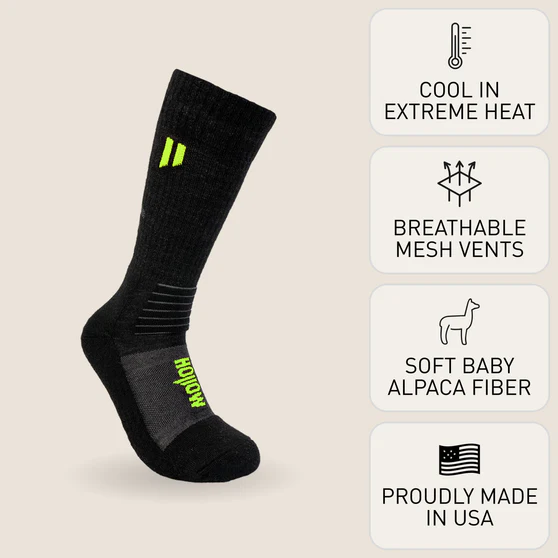
Alpaca fiber has a hollow core, which makes it light and warm for its weight. Hollow Socks, a Wisconsin company, builds its socks around alpaca blended with nylon. Some people who find wool scratchy like alpaca better.
Synthetics
Polyester, nylon and acrylic socks dry the fastest and stand up to a lot of washing. They’re a smart pick for hot weather and heavy sweaters. The downside is odor, so wash them after every wear and give your boots time to dry between shifts.
Cushion Levels: How Thick Should Work Socks Be?
Cushion is the terry-loop padding knit into the sock. More isn’t always better. A thick sock in a boot that was fitted with a thin one will feel tight, cut off circulation and leave your feet colder, not warmer.
- Light cushion: Thin and breathable. Good in hot weather, athletic-style safety shoes and boots with a snug fit.
- Medium cushion (midweight): The everyday choice for most work boots. Padding at the heel, ball and toe without crowding the boot.
- Heavy cushion: Full terry padding. Good for cold weather, rough ground and roomy boots, or when you’re on concrete all day and your boots have room.
Tip from our fitters: Bring the socks you actually work in when you try on boots. Sock thickness can change your fit by half a size.
Sock Heights for Work Boots
The rule is simple: your sock should come up higher than the top of your boot. Otherwise the boot collar rubs your bare skin.
| Sock height | Where it ends | Pair it with |
|---|---|---|
| No-show | Below the ankle bone | Sneakers and low work shoes |
| Ankle or quarter | Just above the ankle bone | Low hikers and athletic-style safety shoes |
| Crew | Mid-calf | 6-inch work boots |
| Boot | Above mid-calf | 8-inch boots and insulated boots |
| Over-the-calf | Just below the knee | Pull-on Wellingtons, rubber boots, tall loggers |
For a 6-inch lace-up boot, a crew sock is the standard. For 8-inch and taller boots, or pull-ons that rub at the shin, go with a boot sock or an over-the-calf. Browse our crew socks and quarter socks to see the heights we carry.
Compression Socks for Long Shifts
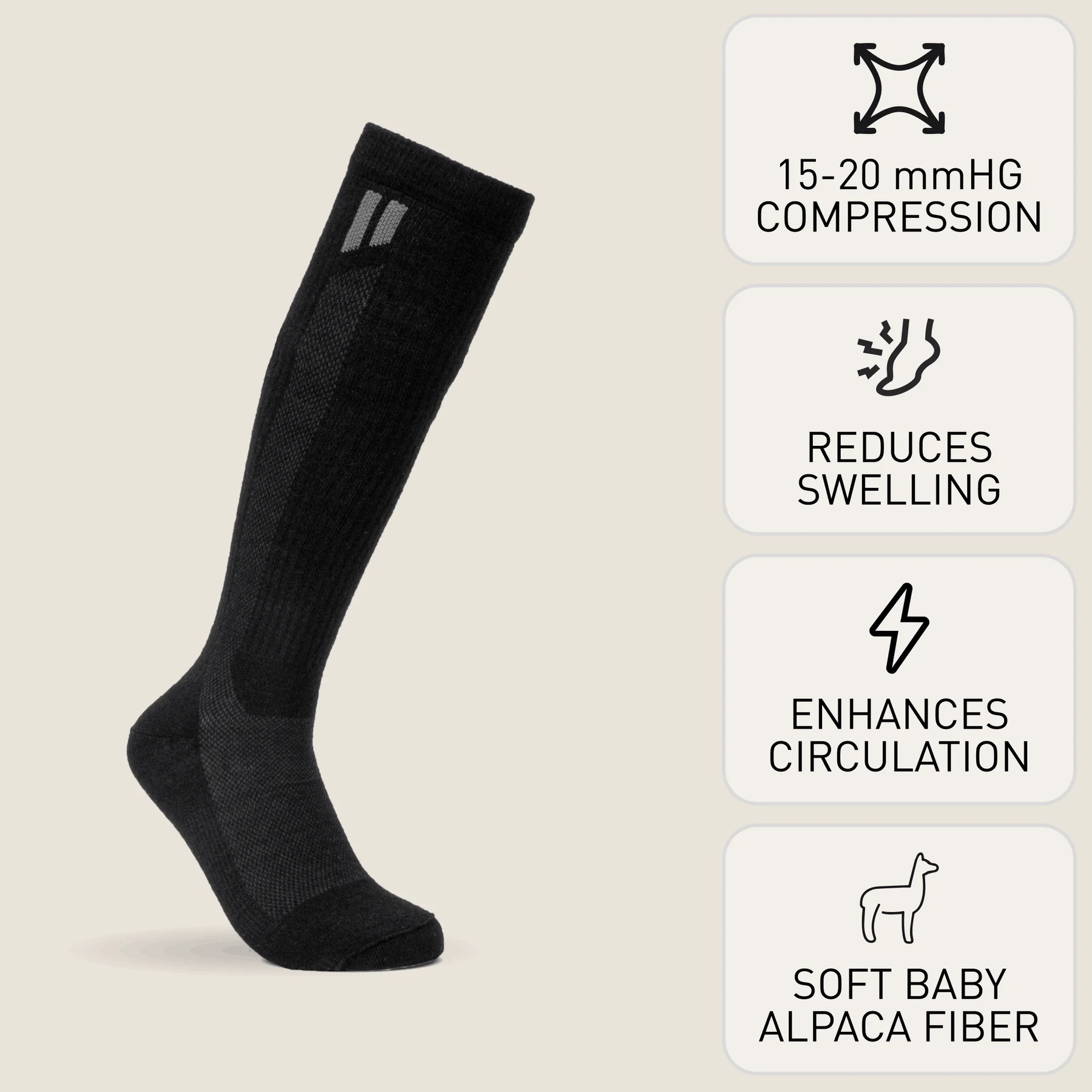
Compression socks apply gentle pressure that’s firmest at the ankle and eases up the leg. Many people who stand all day on concrete, nurses on 12-hour shifts, and anyone who drives a lot say their legs feel less tired and less swollen at the end of the day. Compression is listed in mmHg. Hollow lists its alpaca compression socks at 15–20 mmHg, a common everyday level.
A good compression sock for work still needs to wick. Synthetic and alpaca blends do this well. If you have circulation problems, diabetes, or swelling in one leg, talk to your doctor before wearing compression socks.
Socks We Carry at Sox Outlet
We’ve been helping workers in the Chicago area find the right socks since the 1990s. A few of the lines you’ll find on our wall:
- Hollow socks: Alpaca-blend socks in several styles, including a trades sock built for work boots, a crew, an ankle sock, a no-show, and compression socks in crew and ankle heights. Good for anyone who runs cold or wants an alternative to merino.
- Carhartt socks: Work socks in midweight and heavyweight crew and boot heights, in synthetic and wool blends, with cushion in the heel and toe. Their Force line is built to manage sweat.
- Other brands: Socks rotate with the season. Call ahead and our staff will tell you what’s on the shelf.
Styles and sizes change throughout the year, so call the store to check before you make the trip. See the full socks section on our site.
How to Pick the Best Moisture-Wicking Socks for Work Boots
- Match the sock to the season. Lighter synthetics in summer, wool or alpaca blends in winter. Our winter work boots guide explains how socks and insulation work together.
- Match the sock to your boot height. Always higher than the boot collar.
- Match the cushion to your boot fit. Don’t jam a heavyweight sock into a snug boot.
- Look for a reinforced heel and toe. These are the first places a sock wears out.
- Check for a seamless or flat toe seam. A bulky seam can rub in a safety-toe boot.
- Buy enough pairs to change midday if you sweat heavily.
Tips for Sweaty Feet at Work
If your feet are soaked by noon even in good socks, try these:
- Change socks at lunch. A dry pair halfway through a shift makes a real difference.
- Rotate your boots. Wearing the same boots every day doesn’t give the lining time to dry. Two pairs on alternating days dry out better and last longer.
- Dry your boots properly. Pull out the insoles, open them up and let them air dry away from direct heat.
- Air out your feet on breaks when you can.
- Choose breathable boots for hot, dry jobs. A waterproof membrane holds in more heat. If you don’t need waterproofing, a non-waterproof boot can feel much cooler.
- Wash and dry your feet carefully, including between the toes.
- Talk to a podiatrist or doctor if you have constant heavy sweating, cracking skin, a rash or signs of a fungal infection.
Comfortable feet start with the right boot, too. If your feet hurt by the end of the day, read our guide to the most comfortable work boots.
Frequently Asked Questions
What is the best material for work socks?
For most work boots, a wool-synthetic blend is the best all-around choice. Merino or alpaca handles moisture and warmth, and nylon adds durability. In hot weather, a mostly synthetic sock dries faster.
Are cotton socks bad for work boots?
Cotton isn’t ideal for long shifts. It absorbs sweat and holds it against your skin, which can lead to blisters and cold feet. A cotton blend with synthetic fibers is fine for short, cool days.
What are the best moisture-wicking socks for work boots?
Look for merino, alpaca or synthetic blends with medium cushion at the heel and ball. Pick a crew or boot height that comes up past your boot collar. A reinforced heel and toe helps them last.
Are compression socks good for work?
Many people who stand or walk all day say compression socks help their legs feel less tired. Choose a moisture-wicking pair in a common everyday level such as 15–20 mmHg. Talk to your doctor first if you have circulation problems or diabetes.
How do I keep my feet dry in work boots?
Wear moisture-wicking socks, change them midway through your shift if you sweat heavily, and rotate between two pairs of boots so each pair dries fully. Take the insoles out at night to help the boots dry. If heavy sweating continues, talk to a podiatrist.
Find Your Socks at J.M.D. Sox Outlet
Socks are in our name for a reason. Stop in and our staff will help you match socks to your boots, your job and the season, and we can fit your boots with the socks you’ll actually wear.
Call the store to check sizes and styles, and we’ll set them aside for pickup at that same store. Or just walk in. We also take special orders for hard-to-find sizes and bulk crew orders.
- Oak Forest: 6220 159th Street, Oak Forest, IL 60452, on 159th St near Rob Roy Dr, across from the Tinley Creek Trail System. Call (708) 535-9714. Hours: Mon–Fri 11 AM–7 PM, Sat 9:30 AM–5:30 PM, Sun 11 AM–5 PM.
- Hoffman Estates: 19A Golf Center, Hoffman Estates, IL 60169, in the Golf Center next to TJ Maxx, off Golf and Roselle Roads. Call (224) 795-5566. Hours: daily 10 AM–7 PM.
Get directions on our locations page.