
Yes, you can wash a Carhartt jacket in a washing machine. For most duck jackets, bibs and pants: empty the pockets, close the zippers, turn the garment inside out, wash in cold water on a gentle or normal cycle with mild detergent, skip bleach and fabric softener, then tumble dry on low or hang to dry.
That’s the short version. The longer version matters because a Carhartt coat is a mix of materials: heavy cotton duck on the outside, quilted or sherpa lining inside, sometimes a Rain Defender water-repellent finish, and metal zippers and snaps. Each one reacts differently to hot water and high heat. Below, our staff walk through every common piece, from a chore coat to insulated bibs, plus stains, shrinking and restoring water repellency. Always read the care label first. It’s sewn into every garment and it beats any general advice, including ours.
Before You Wash: The 5-Minute Prep
A few minutes of prep does more to protect your gear than any special detergent.
- Read the care label. Look for the water temperature, the dryer setting, and any “do not” symbols. Flame-resistant (FR) and some insulated pieces have their own instructions.
- Empty every pocket. Screws, pencils, receipts and lighters can tear lining or damage your machine.
- Close zippers, snaps and hook-and-loop tabs. Open metal teeth snag lining and other clothes.
- Brush off dried mud first. Let it dry, then knock it off outside with a stiff brush so you aren’t washing grit into the fabric.
- Pre-treat stains (see the stain section below).
- Turn it inside out. This protects the outer finish and cuts down on fading and wear on the seams.
How to Wash a Carhartt Jacket or Coat
The question we hear most at the counter is “can I wash my Carhartt jacket?” For the classic duck jackets and coats, the answer is yes, in a regular washing machine. Here’s how we do it.
- Wash it alone or with a few similar dark colors. New duck can bleed dye for the first few washes.
- Use cold water. Cold is gentler on cotton, on dye and on water-repellent finishes, and it lowers the chance of shrinking.
- Pick a gentle or normal cycle and a mild liquid detergent. Powder can leave residue in heavy canvas.
- No bleach and no fabric softener. Softener coats fibers. On a Rain Defender piece it can make water soak in instead of beading off.
- Give it an extra rinse if your machine allows. Heavy duck holds onto soap.
A front-loader or a top-loader without a center agitator is easiest on bulky coats. If your home machine is small and the jacket barely fits, a large machine at the laundromat lets it move freely and rinse clean.
Firm Duck vs. Washed Duck
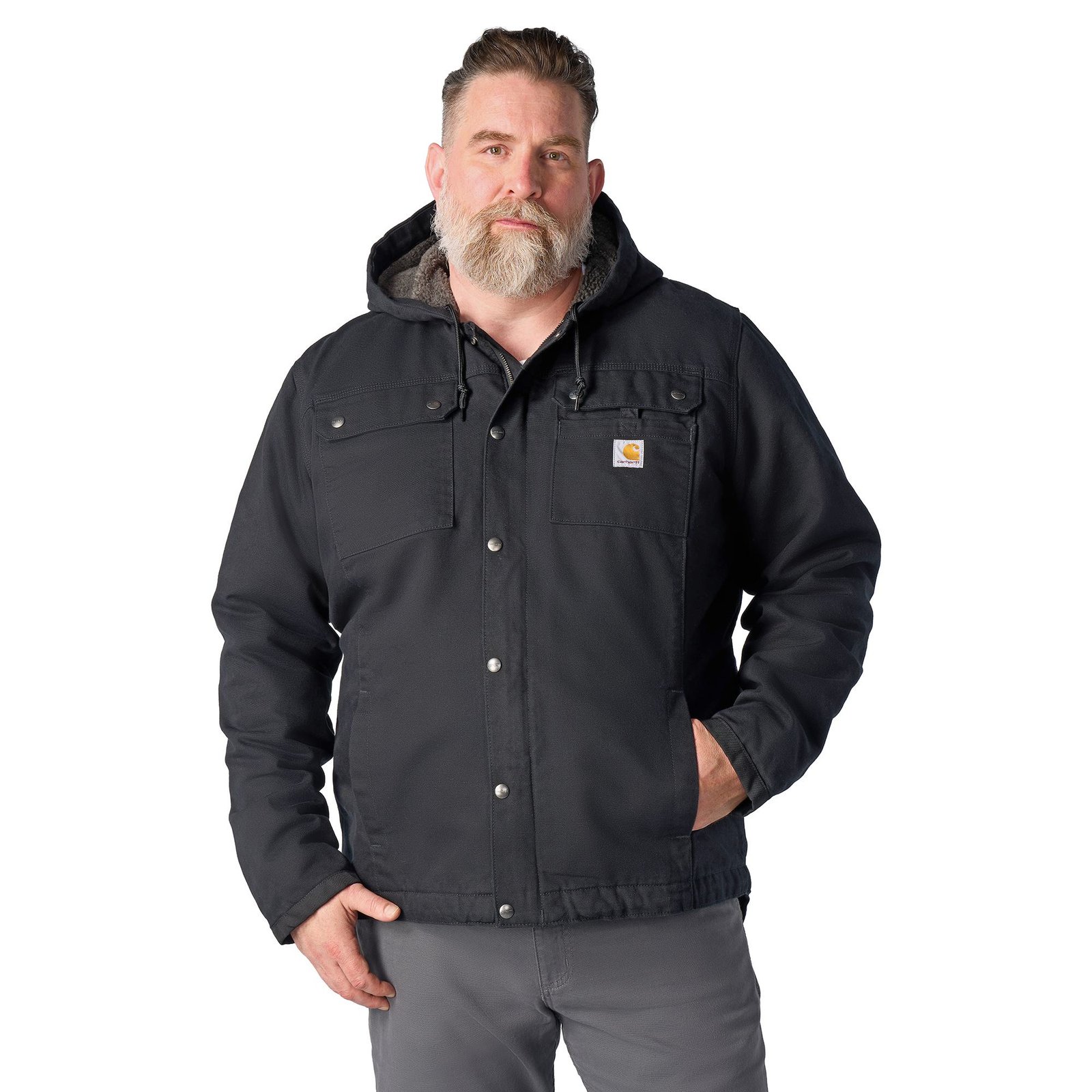
Carhartt makes its duck in more than one finish. Firm Duck is the stiff, heavy canvas that takes time to break in. Washed Duck has already been washed for a softer, broken-in feel. Both wash the same way. Firm Duck softens a little with each cold wash, which is normal and won’t hurt its toughness. If you want to break in a stiff new jacket faster, wearing it hard does more than washing it over and over.
Quilted, Flannel and Sherpa-Lined Jackets
Lined and insulated jackets wash the same way, but drying takes more care. Quilted nylon linings and polyester insulation don’t like high heat. Sherpa (the fleece-like pile lining) can mat or pill if it’s dried hot. Use cold water, a gentle cycle and low heat. Toss in two or three clean tennis balls or dryer balls to keep the insulation from clumping. Take the jacket out while it’s still slightly damp and let it finish on a sturdy hanger.
Rain Defender and Other Water-Repellent Jackets
Rain Defender is Carhartt’s durable water-repellent (DWR) finish. It makes water bead up and roll off, but it’s water-repellent, not waterproof. Storm Defender is different: it’s Carhartt’s waterproof, breathable construction with a membrane. For both, wash cold with a mild detergent and no softener. Strong degreasers and fabric softener are the two fastest ways to kill a DWR finish. See the section on restoring water repellency below.
Flame-Resistant (FR) Carhartt
FR garments have their own label instructions, and you should follow them exactly. In general, skip bleach, fabric softener and starch, which can coat the fibers and hide or reduce the protective properties. Get oil and grease out promptly, since a garment soaked with flammable contaminants won’t protect you the way it should. If your employer launders FR gear, follow their program.
How to Wash Carhartt Bibs, Overalls and Coveralls
Bibs, overalls and coveralls usually get dirtier than anything else you own, so prep matters even more.
- Knock off dried mud and shake out the legs.
- Fasten the suspender buckles or clip them together so the metal hardware doesn’t bang around and chip your drum. Some people tuck them into a front pocket.
- Close the leg zippers on insulated bibs.
- Turn them inside out and wash cold on a normal cycle with mild detergent.
- For heavy grime, use a pre-soak in cold water with a little detergent for 30 minutes before the wash cycle.
Insulated bibs and coveralls need the same low-heat drying as lined jackets: low setting, dryer balls, and pull them while slightly damp. Unlined duck bibs and overalls can tumble dry on low, but they’ll dry faster and keep their shape best if you hang them by the straps. Want to know which style to wear this winter or how bibs should fit? Our Carhartt size and fit guide covers inseams and layering room.
Can You Put a Carhartt Jacket in the Dryer?
Yes, most Carhartt jackets, bibs and overalls can go in the dryer on low heat, unless the care label says otherwise. High heat is the real enemy. It can shrink cotton duck and denim, scorch synthetic lining, and stress the seams. Here’s our rule of thumb:
- Tumble dry low, never high.
- Add dryer balls for insulated pieces.
- Pull it while slightly damp, then hang it to finish. Heavy canvas can take more than one cycle to dry all the way through, and that’s when over-drying happens.
- Hang-drying works too. It’s the gentlest option. Use a sturdy hanger, keep it out of direct heat, and give it a day. Don’t dry it on a radiator or space heater.
A quick low-heat tumble after hang-drying can also soften stiff duck and help reactivate a water-repellent finish.
Carhartt Care by Garment
Use this table as a quick reference. Your garment’s care label wins if it says something different.
| Garment | Water | Cycle | Drying | Watch out for |
|---|---|---|---|---|
| Duck jacket or coat (unlined) | Cold | Gentle or normal | Tumble low or hang | Dye bleed when new; wash with darks |
| Quilted or sherpa-lined jacket | Cold | Gentle | Low with dryer balls; finish on a hanger | High heat mats sherpa and clumps fill |
| Rain Defender jacket or hoodie | Cold | Gentle | Tumble low | No softener; heat can help the finish |
| Duck bibs or overalls | Cold | Normal | Hang by straps or tumble low | Fasten buckles; pre-soak heavy mud |
| Insulated bibs or coveralls | Cold | Gentle | Low with dryer balls | Close leg zippers; dry fully to avoid odor |
| Work pants and jeans | Cold | Normal, inside out | Tumble low or hang | Hot dryer can shrink length |
| Hoodies and sweatshirts | Cold | Normal, inside out | Tumble low | Inside out reduces pilling |
| T-shirts | Cold | Normal | Tumble low | Heat shrinks cotton tees |
| FR garments | Per label | Per label | Per label | No bleach, softener or starch |
How to Wash Carhartt Pants and Jeans
Carhartt work pants, double-fronts, Rugged Flex stretch pants and jeans are easy:
- Turn them inside out to protect the color and the face of the fabric.
- Wash cold with similar colors.
- Tumble dry low or hang. Stretch fabrics with spandex or elastane last longer away from high heat.
Raw or dark denim fades every time it’s washed, so many people wash jeans less often and spot-clean between washes. If you’re shopping for new work pants, check our work pants section, then call the store to check sizes.
Hoodies, Sweatshirts and T-Shirts
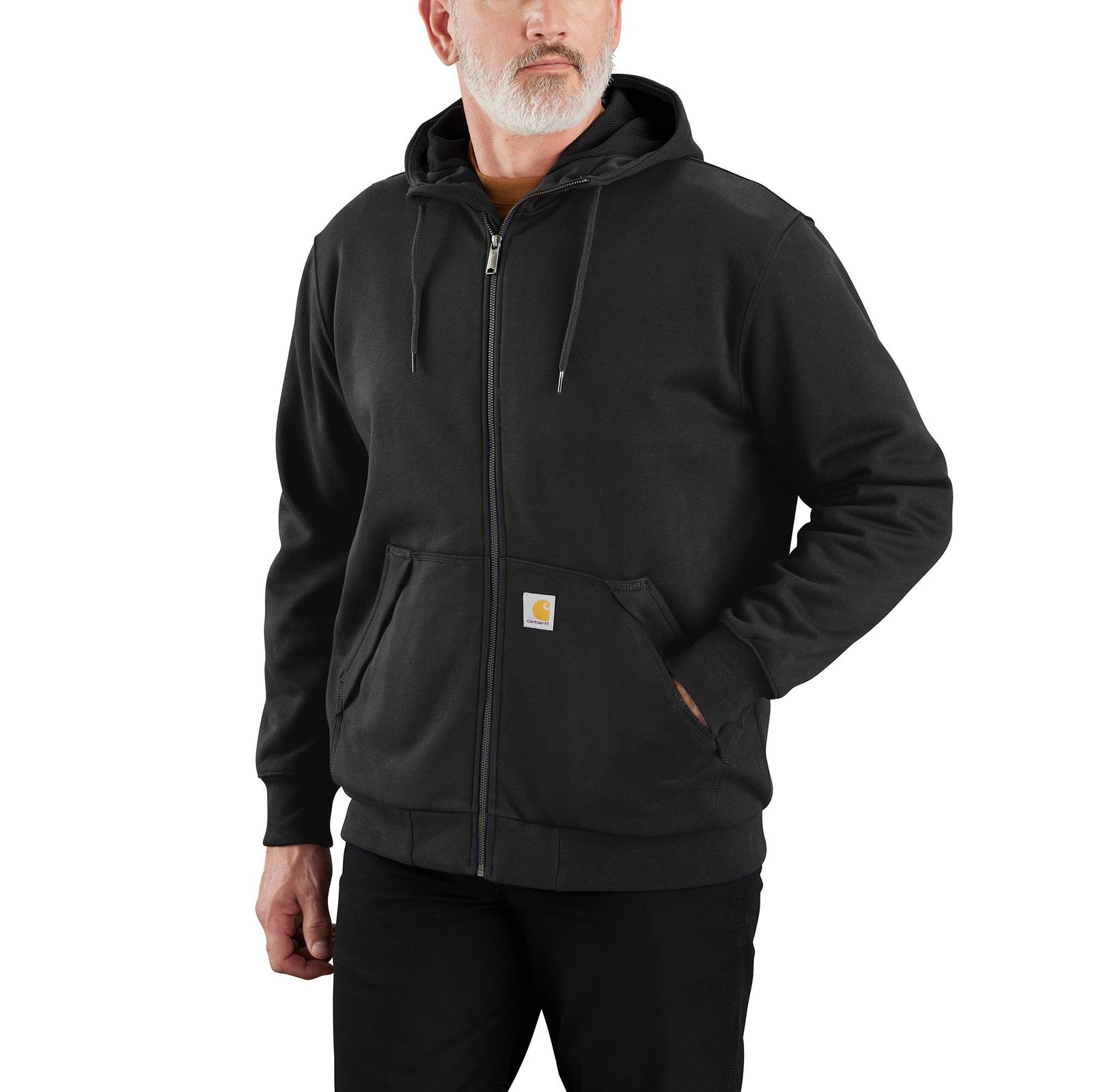
Carhartt hoodies, quarter-zips and pocket tees are mostly cotton or cotton-poly blends. Wash them inside out in cold water and dry on low. Inside out keeps the logo patch and the face of the fleece looking new and cuts down on pilling. Rain Defender sweatshirts follow the Rain Defender rules above: no fabric softener.
Stains: Grease, Oil, Mud and Paint
Treat stains before they go in the wash, and check that they’re gone before the garment goes in the dryer. Heat can set a stain for good.
- Grease and motor oil: Blot off the excess. Work a drop of grease-cutting dish soap into the spot with a soft brush or your thumb, let it sit for 10 to 15 minutes, then wash cold. Repeat if needed. Go easy on Rain Defender pieces, since strong degreasers can strip the finish.
- Mud and clay: Let it dry completely, brush off as much as you can, then pre-soak in cold water before washing. Hot water can set clay stains.
- Blood: Rinse with cold water right away. Never use hot.
- Wet paint: Latex paint comes out best with soap and water while it’s still wet. Dried paint usually doesn’t come out fully.
- Tar, adhesive and sealants: Scrape off what you can and follow the product maker’s cleanup guidance. Spot-test any solvent on a hidden seam first.
Will a Carhartt Jacket Shrink?
Cotton duck, denim and cotton knits can shrink a little, mostly from hot water and high dryer heat. Cold water and low heat keep shrinkage to a minimum. If you’re between sizes, size based on how the garment fits the day you try it on and wash it cold from day one. If a jacket already feels snug in the chest or short in the sleeves, our Carhartt sizing guide explains Relaxed vs. Loose fits and when to size up for layering.
How to Restore Water Repellency
If water is soaking into your Rain Defender jacket instead of beading up, the finish needs help. Dirt, body oils and detergent residue can all make a DWR finish stop working.
- Wash it clean first. A dirty jacket repels water poorly. Use cold water, mild detergent, an extra rinse and no softener.
- Apply some low heat. Many DWR finishes perk up after a low-heat tumble dry, if the label allows the dryer.
- Re-treat it. If beading still doesn’t come back, use a spray-on or wash-in water repellent made for cotton canvas or your jacket’s fabric. Apply it to a clean jacket, following the product’s directions.
For waterproof Storm Defender gear, keep the membrane clean and avoid softener. The water-repellent outer finish can be refreshed the same way.
How Often Should You Wash a Carhartt Jacket?
Less often than you’d think. Heavy duck coats don’t need washing after every wear. Spot-clean between washes and do a full wash when the coat smells, is covered in grime, or has stains you can’t brush off. For most people that’s a few times a season. Hoodies, T-shirts and pants that sit against your skin need washing more often. FR gear should be washed whenever it’s soiled with oil, grease or other flammable contaminants. Washing less often keeps the color, the finish and the fabric looking newer longer.
Your feet need the same attention. Damp socks and boots wear out faster than any jacket. Our guide to moisture-wicking work socks covers what keeps feet dry through a long shift.
Frequently Asked Questions
Can you wash a Carhartt jacket in the washing machine?
Yes. Most Carhartt duck jackets and coats are machine washable. Close the zippers, turn the jacket inside out, and wash it in cold water on a gentle or normal cycle with mild detergent. Always check the care label first, especially for FR or specialty pieces.
Can you put a Carhartt jacket in the dryer?
Yes, on low heat, unless the care label says not to. High heat can shrink cotton duck and damage linings. For insulated jackets, add dryer balls and take the jacket out while it’s slightly damp so it can finish drying on a hanger.
How do you wash Carhartt bibs and overalls?
Brush off dried mud, fasten the suspender buckles, close any leg zippers, and turn the bibs inside out. Wash them in cold water with mild detergent, with a pre-soak for heavy grime. Hang them by the straps to dry or tumble dry on low.
Should you use fabric softener on Carhartt?
No. Fabric softener coats the fibers. On Rain Defender gear it can stop water from beading, and on FR garments it can reduce the protective properties.
How often should you wash a Carhartt jacket?
Only when it’s actually dirty or smells. Spot-clean between washes and do a full wash a few times a season. FR gear is the exception: wash it whenever it’s soiled with oil or grease.
Will a Carhartt jacket shrink in the wash?
It can shrink a little if you use hot water or high dryer heat. Washing in cold and drying on low keeps shrinkage to a minimum. If your jacket is already tight, try on the next size up in the store, since you’ll want room for layers in winter.
Shop Carhartt at J.M.D. Sox Outlet
J.M.D. Sox Outlet is a family-run workwear and boot store that has served tradespeople, crews and healthcare workers in the Chicago area since the 1990s. We carry Carhartt jackets, bibs, pants, hoodies and more, and our staff can help you compare fits and fabrics before winter hits.
To check a size or style, call the store and we’ll set it aside for pickup at that same store. Or just walk in. We also take special orders for hard-to-find sizes, specific models and bulk crew orders.
- Oak Forest: 6220 159th Street, Oak Forest, IL 60452, on 159th St near Rob Roy Dr, across from the Tinley Creek Trail System. Call (708) 535-9714. Hours: Mon–Fri 11 AM–7 PM, Sat 9:30 AM–5:30 PM, Sun 11 AM–5 PM.
- Hoffman Estates: 19A Golf Center, Hoffman Estates, IL 60169, in the Golf Center next to TJ Maxx, off Golf and Roselle Roads. Call (224) 795-5566. Hours: daily 10 AM–7 PM.
Find directions on our locations page, or browse our work jackets before you call.