The most comfortable work boots are the ones that fit your foot and suit your job. In general, that means a boot with a roomy toe box, a cushioned, supportive footbed, a shock-absorbing midsole and the lightest safety toe your job allows. Moc-toe wedge boots and athletic-style boots are often the most comfortable on concrete.
Brand names help narrow it down, but no single boot is the most comfortable for everyone. A boot that feels great on a warehouse floor may wear you out on a muddy job site. This guide explains what actually makes a work boot comfortable, which styles suit which jobs, and the comfort features that stand out from the brands we fit every day: Thorogood, Ariat, Timberland PRO, Red Wing, Carolina, Wolverine, Irish Setter and Georgia Boot.
What Makes a Work Boot Comfortable?
1. Fit Comes First
Even the most cushioned boot hurts if it’s the wrong size. A comfortable fit means:
- About a thumb’s width of space between your longest toe and the end of the boot, so your toes don’t hit the toe cap when you walk.
- A snug heel that lifts only slightly as you walk. A heel that slides causes blisters.
- Enough width across the ball of your foot. Many work boots come in wide widths, and plenty of people who think they need a bigger size actually need a wider one.
- Fitting late in the day, when your feet are at their largest, while wearing your work socks.
Foot size changes over time, so it’s worth getting measured instead of assuming you’re the same size you were ten years ago.
2. Weight
Every ounce on your foot gets lifted thousands of times a shift. Lighter boots generally feel less tiring by the end of the day. Weight comes from the toe cap, the leather, the outsole and the construction method.
3. Toe Cap Type
If your job requires safety toes, you have options. Steel toes are thin and strong but heavier. Composite and nano or alloy toes are usually lighter, and composite doesn’t conduct cold the way steel does. Every safety toe sold for work in the U.S. should meet ASTM F2413, the standard for protective footwear (the current edition is ASTM F2413-24), so the protection rating matters more than the material. If your job doesn’t need safety toes, a soft-toe boot is lighter and flexes more easily.
4. Footbed and Insole
The footbed is what your foot actually stands on. Look for one with real arch support and a cushioned heel. Many brands use removable footbeds, which means you can swap in an aftermarket insole if you need different support.
5. Midsole and Shock Absorption
The midsole sits between the footbed and the outsole and absorbs impact. Polyurethane (PU) midsoles are durable and hold their cushion. EVA is lighter and softer but can compress over time.
6. Wedge vs. Heel Outsole
A wedge sole is flat from heel to toe. It spreads your weight over a larger area, which many people find more comfortable on flat, hard floors. A defined heel with deep lugs grips better on ladders, slopes, mud and gravel. Choose for the surface you stand on most.
7. Flexibility and Break-In
A boot should bend where your foot bends: at the ball, not the arch. Stiff, heavy leather boots with a Goodyear welt take longer to break in but often mold to your foot and can be resoled. Athletic-style boots usually feel good right out of the box. Wear new boots for a few hours at a time at first.
Comfort Features by Boot Style
| Boot style | Weight | Out-of-box comfort | Best surfaces | Watch out for |
|---|---|---|---|---|
| Moc-toe wedge (6-inch) | Medium | Good; leather softens with wear | Concrete, warehouse floors, flat job sites | Less grip on mud, ice and ladders |
| Athletic-style or hiker | Light | Very good | Warehouses, mixed indoor and outdoor | Less ankle support than taller boots |
| Lugged 6-inch or 8-inch lace-up | Medium to heavy | Fair to good | Construction, dirt, gravel, ladders | Heavier; longer break-in |
| Logger | Heavy | Fair | Rough ground, slopes, forestry, utility | Heavy; tall shaft takes time to break in |
| Pull-on Wellington | Medium | Good; easy on and off | Farms, shops, ranch work | Looser heel fit; less ankle support |
| Insulated waterproof boot | Medium to heavy | Good | Cold, wet outdoor work | Hot indoors; fit with thicker socks |
The Most Comfortable Work Boots by Job
Concrete Floors and Warehouse Work
Hard floors are where comfort matters most. Look for a wedge or cushioned athletic-style outsole, an anti-fatigue or gel-cushioned footbed, and a composite toe if you need a safety toe. A classic moc-toe wedge boot or a lightweight hiker is the usual favorite.
Construction and Job Sites
You need grip, support and durability as much as cushion. A 6-inch or 8-inch lace-up with a lugged outsole and a defined heel is the standard. Add a quality insole if you’re on rebar or uneven ground all day.
Electricians
Look for an EH (electrical hazard) rating. Under ASTM F2413, EH footwear is tested to provide secondary protection against accidental contact with live circuits in dry conditions. It’s not a substitute for other protective measures. Many electricians also prefer a non-metallic composite toe, which is lighter than steel and keeps metal out of the toe area.
Long Shifts (10 to 12 Hours)
Prioritize low weight, a cushioned midsole and a supportive footbed. Rotate between two pairs so each pair can dry out and recover its cushion. Good moisture-wicking socks make a bigger difference than most people expect. Our work socks guide explains why.
Wet and Cold Work
A waterproof membrane and insulation keep you comfortable outdoors, but they add warmth and weight. If you only need waterproofing, choose an uninsulated waterproof boot. Our winter work boots guide covers insulation grams and cold-weather soles in detail.
Brand Standouts for Comfort
These are the comfort features we point out most often when fitting boots. Specific features vary by model, so check the details on the boot you’re trying on.
Thorogood Moc-Toe Wedges
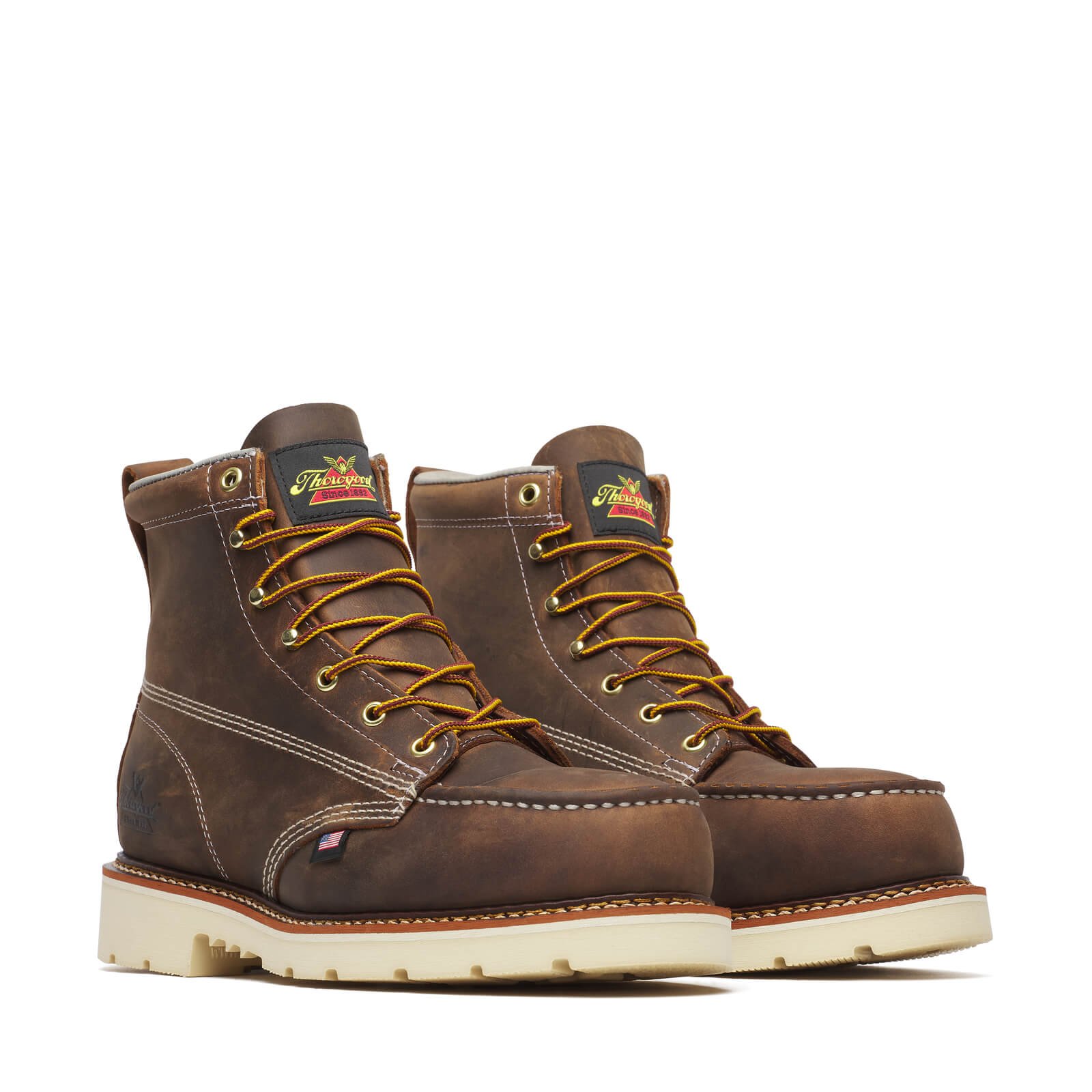
Thorogood’s moc-toe wedge boots are a longtime favorite on concrete. Many styles use the MAXWear Wedge polyurethane outsole, which is built to cushion and reduce fatigue on hard surfaces, along with a Poron comfort cushion insole and Goodyear storm welt construction. Thorogood’s American Heritage series is made in the USA with USA and globally sourced components. They’re available in soft-toe and safety-toe versions.
Ariat (ATS Technology)
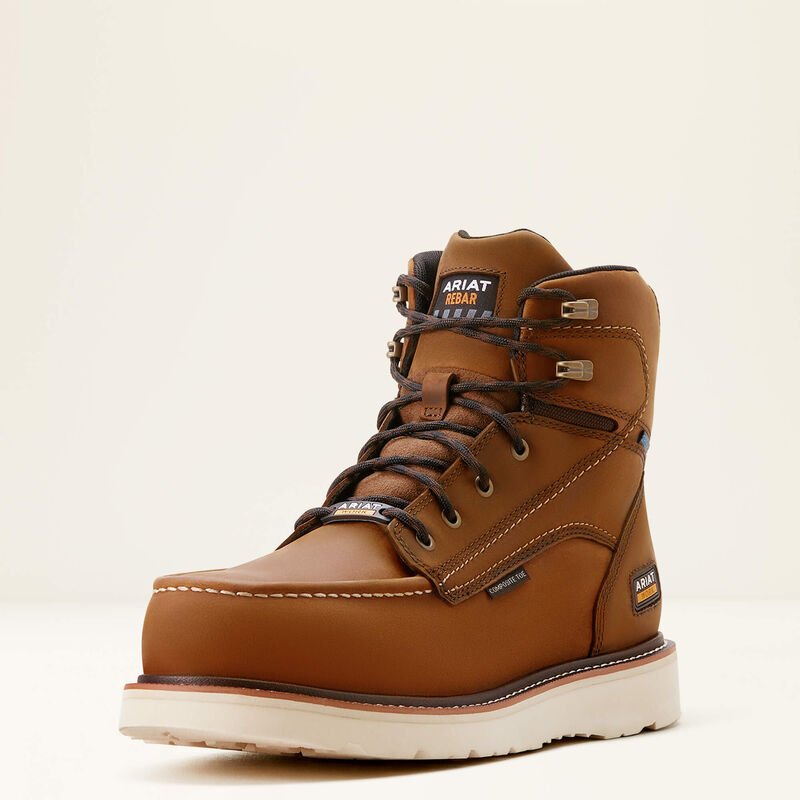
Many Ariat work boots use ATS (Advanced Torque Stability), Ariat’s footbed and support system, which pairs a cushioned footbed with a heel stabilizer and shank to support the foot and reduce fatigue. Ariat’s Rebar wedge boots and WorkHog styles are popular with people who want an athletic feel in a work boot.
Timberland PRO (Anti-Fatigue Technology)
Timberland PRO’s Anti-Fatigue Technology uses a footbed with an inverted-cone design that compresses and rebounds under your foot to absorb shock and return energy. It adds very little weight. You’ll find it in many Timberland PRO boots, including the Boondock and Endurance lines.
Red Wing
Red Wing builds a range of work boots, from traditional leather boots to lighter styles, including wedge-sole models for flat surfaces. Many Red Wing boots use welted construction that can be resoled.
Carolina, Wolverine and Irish Setter Wedges
- Carolina makes a wide range of moc-toe and plain-toe wedge boots, and some of its wedge styles are made in the USA.
- Wolverine uses its DuraShocks comfort system in many styles for shock absorption, and offers wedge boots in waterproof and safety-toe versions.
- Irish Setter, a Red Wing brand, makes Wingshooter and other wedge-sole work boots, with or without waterproofing and safety toes.
Georgia Boot
Georgia Boot’s AMP insoles focus on cushioning and heel support, and its Carbon Flex line includes wedge and moc-toe options.
Do Insoles Make Work Boots More Comfortable?
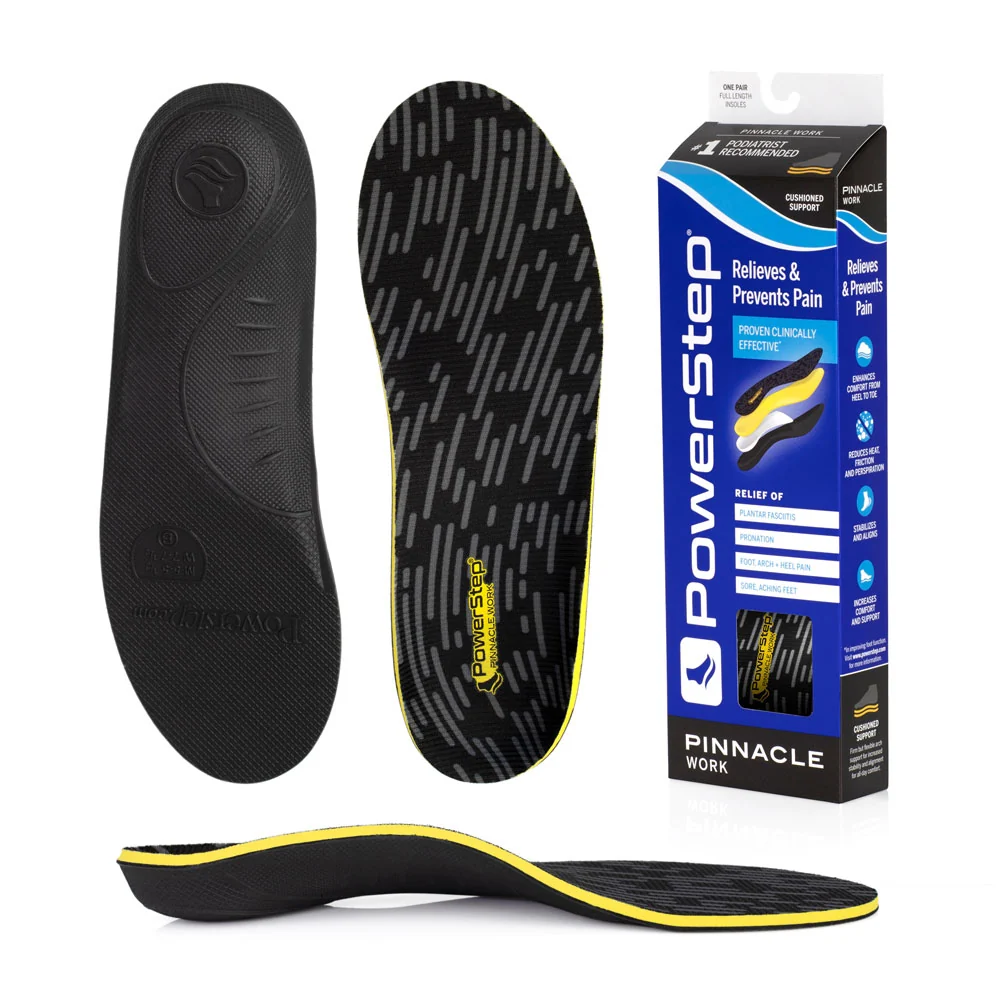
Often, yes. The footbed that comes in many boots is basic. An aftermarket insole can add arch support, a deeper heel cup and better shock absorption. We carry Powerstep insoles such as the Pinnacle Work, a full-length insole with a neutral arch and a deep heel cradle designed for standing on hard floors. See all our insoles.
Two cautions: replace your insoles when they flatten out, and if your boots carry an EH or SD rating, ask before swapping insoles. ASTM F2413 notes that modifying protective footwear, including adding aftermarket insoles, could affect whether it still meets the standard. For ongoing foot pain, talk to a podiatrist.
Frequently Asked Questions
What are the most comfortable work boots?
The most comfortable work boots fit your foot well, are as light as your job allows, and have a cushioned, supportive footbed. Moc-toe wedge boots like Thorogood’s and boots with comfort systems like Ariat ATS and Timberland PRO Anti-Fatigue Technology are popular choices. The best way to know is to try them on with your work socks.
Are wedge sole boots more comfortable?
Many people find wedge soles more comfortable on concrete and other flat, hard surfaces because they spread your weight evenly. They have less grip on mud, ice and ladder rungs. If you climb or work on loose ground, a heel with deep lugs is usually better.
Are composite toe boots more comfortable than steel toe?
Composite toe boots are usually lighter and don’t conduct cold like steel, which many people find more comfortable. Both types must meet the same ASTM F2413 impact and compression requirements. Fit and footbed matter more for comfort than the toe material.
What are the most comfortable work boots for standing on concrete all day?
Look for a cushioned wedge or athletic-style outsole, a shock-absorbing midsole and a supportive footbed. Adding a quality insole like Powerstep and rotating two pairs of boots can also help. If your feet still hurt, talk to a podiatrist.
How long does it take to break in work boots?
It depends on the boot. Athletic-style boots may feel good on day one, while heavy welted leather boots can take a few weeks of regular wear. Start with a few hours at a time and wear the socks you’ll work in.
Get Fitted at J.M.D. Sox Outlet
The fastest way to find your most comfortable work boot is to try several on. Our fitters measure your feet and help you compare boots by weight, toe type and outsole, and we’ve been doing it for tradespeople, warehouse crews and healthcare workers in the Chicago area since the 1990s.
Call the store to check sizes, and we’ll set your boots aside for pickup at that same store. Or just walk in. We take special orders for hard-to-find sizes and widths, specific models and bulk crew orders.
- Oak Forest: 6220 159th Street, Oak Forest, IL 60452, on 159th St near Rob Roy Dr, across from the Tinley Creek Trail System. Call (708) 535-9714. Hours: Mon–Fri 11 AM–7 PM, Sat 9:30 AM–5:30 PM, Sun 11 AM–5 PM.
- Hoffman Estates: 19A Golf Center, Hoffman Estates, IL 60169, in the Golf Center next to TJ Maxx, off Golf and Roselle Roads. Call (224) 795-5566. Hours: daily 10 AM–7 PM.
Find directions on our locations page, or browse all our work boots before you visit.