The best winter work boots keep your feet warm, dry and steady on slick ground. For most Chicago-area outdoor work, that means a waterproof boot with 200g to 400g of insulation, a rubber outsole that stays flexible in the cold, and a composite or nano safety toe if you need one. Fit and job matter more than brand.
Chicago winters are long, and a bad pair of boots makes every one of those days longer. This 2026 guide explains insulation grams, waterproof membranes, winter outsoles and safety toes in the cold. Then it covers the brand matchups customers ask us about most: Thorogood vs. Ariat, Georgia Boot vs. Ariat, Carolina vs. Georgia Boot, plus Timberland PRO, Wolverine and Irish Setter.
What Makes a Boot Winter-Ready?
A winter work boot has three jobs:
- Keep heat in with insulation.
- Keep water out with a waterproof membrane or construction.
- Keep you upright with an outsole that grips on snow, slush and ice and stays flexible when it’s cold.
A boot that does only one or two of these isn’t a real winter boot. An insulated boot that leaks gets cold fast, and a warm, dry boot with a hard, slick sole is a fall waiting to happen.
Insulation Grams: 0g vs. 200g vs. 400g vs. 800g and Up
Boot insulation, most often 3M Thinsulate or a brand’s own synthetic insulation, is rated in grams per square meter. More grams means more warmth, and also more bulk and more heat when you’re working hard. These ranges are general guidelines. How warm a boot feels depends on your activity level, your socks, how long you’re outside and how well the boot fits.
| Insulation | Conditions | Activity level | Typical jobs |
|---|---|---|---|
| 0g (uninsulated) | Cool to mild, or indoors | Any | Warehouse, shop, mild-weather outdoor work; add warm socks |
| 200g | Cool to cold | Active, on the move | Construction, landscaping, yard work, loading docks |
| 400g | Cold, below freezing | Moderate | Outdoor construction, utility, roofing, farm chores |
| 600g–800g | Very cold | Low, standing still for long stretches | Flaggers, inspectors, security, ice-cold yards |
| 1,000g and up | Extreme cold | Very low | Long hours standing outdoors, hunting, ice fishing |
Our rule of thumb: the more you move, the less insulation you need. Someone framing a house all day often finds 200g plenty, while a flagger standing in one spot may want 600g or more. Too much insulation makes feet sweat, and damp feet get cold. That’s why socks matter as much as grams. Our guide to moisture-wicking work socks explains how to pick them.
Waterproof Membranes vs. Treated Leather
Waterproof membranes are thin liners inside the boot that block water from getting in while letting some sweat vapor out. Many brands use their own membranes. For example, Ariat’s H2O styles are waterproof. If you’re in slush, standing water or wet snow regularly, a membrane boot is the way to go.
Treated or oiled full-grain leather without a membrane sheds water for a while but will eventually soak through. It breathes better and is fine for short trips through snow.
Look for “WP” or “waterproof” in the product name and check for a gusseted tongue, which keeps snow from getting in through the laces. Either way, condition the leather and dry boots properly between shifts. Find leather conditioners, boot oils and waterproofing sprays in our boot care products.
Outsoles That Grip in Slush, Ice and Oil
Winter traction depends on two things: the rubber and the tread.
- Rubber that stays flexible. Some outsole compounds stiffen in the cold and lose grip. Winter-focused soles are made to stay pliable.
- Deep, multi-directional lugs that bite into snow and shed slush instead of packing up.
- Slip and oil resistance for docks, shops and job sites where snowmelt mixes with oil and grease.
- A defined heel for ladders and steps. Wedge soles are comfortable on concrete but have less bite on snow and ice.
No boot sole grips on glare ice. If your job includes icy walks or lots, a pair of ice cleats or traction devices that pull over your boots adds a lot of grip.
Safety Toes in Cold Weather
All safety-toe work boots sold for U.S. jobs should meet ASTM F2413-24, the current edition of the standard for protective footwear. A boot labeled for impact and compression protection (shown as I and C, or I/75 and C/75 on older labels) has passed tests for a 75 foot-pound impact and 2,500 pounds of compression. Other ratings you’ll see include EH (electrical hazard), Mt (metatarsal), PR (puncture resistant) and SD (static dissipative).
For winter, the material of the toe cap matters:
- Steel toes conduct cold, so the toe area can feel colder in a thinly insulated boot.
- Composite toes are non-metallic and don’t conduct cold the same way. They’re usually lighter too.
- Nano and alloy toes are thinner and lighter than steel, giving you a bit more toe room for warm socks.
If you work outside all winter in safety toes, a composite or nano toe with 400g of insulation is a very common choice.
Brand Matchups: Which Winter Work Boot Brand Is Right for You?
We carry all of these brands and fit them every day, so here’s an honest comparison. Every brand has boots that suit some jobs better than others, and features vary by model.
Thorogood vs. Ariat
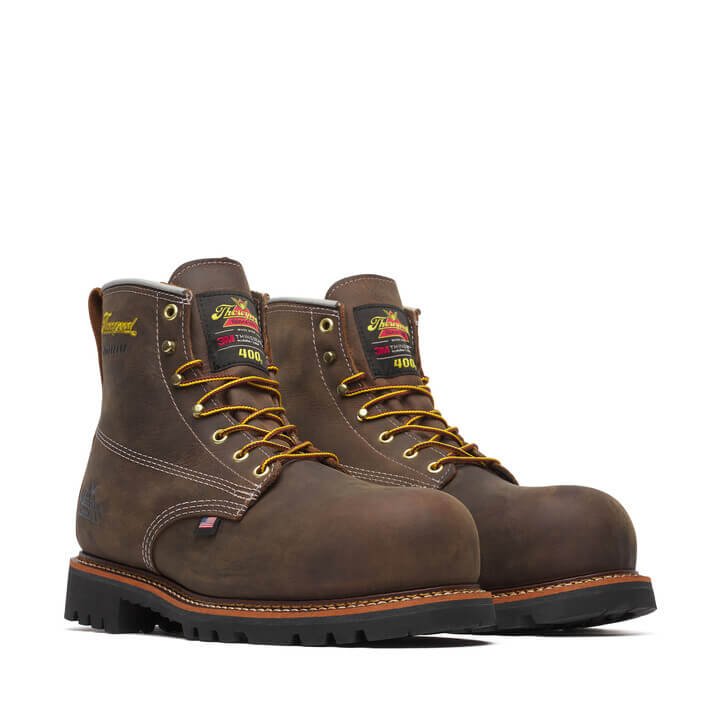
Thorogood is known for traditional leather work boots: moc-toe wedges, loggers and Wellingtons with Goodyear storm welt construction. Its American Heritage series is made in the USA with USA and globally sourced components. Thorogood also offers waterproof, insulated styles, including nano-toe options.
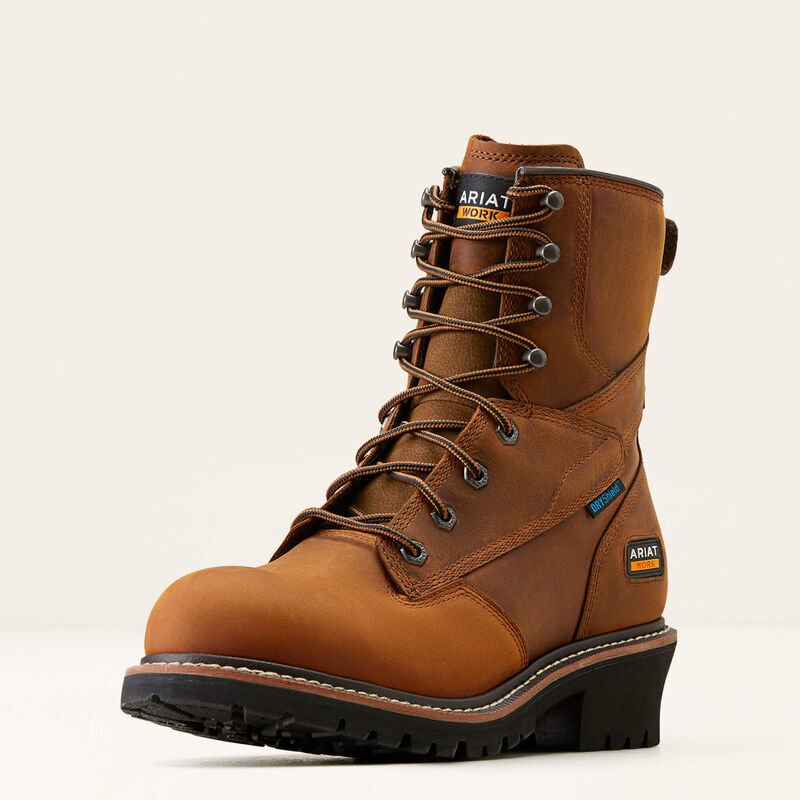
Ariat leans toward a more athletic, modern feel. Many Ariat work boots use the ATS footbed and support system, and Ariat offers waterproof H2O styles, composite toes and insulated options in lines like WorkHog and Rebar.
Bottom line: Choose Thorogood if you want a classic welted leather boot that breaks in to your foot. Choose Ariat if you want a lighter, more athletic boot that feels good out of the box. Our comfortable work boots guide goes deeper on comfort features.
Georgia Boot vs. Ariat
Georgia Boot builds rugged boots for farm and job-site work, with AMP insoles for cushioning and lines such as Carbon Flex. It’s a common choice for people who want a tough, straightforward boot.
Ariat puts more focus on athletic-style support and comfort technology and modern styling.
Bottom line: For heavy farm and site work where you want a no-frills, tough boot, Georgia Boot is a good fit. If you want more athletic-style support, try Ariat.
Carolina vs. Georgia Boot
These two are closely matched. Carolina is known for loggers, moc-toe wedges and insulated waterproof boots, and some of its styles are made in the USA. Georgia Boot focuses on rugged farm and work boots with AMP cushioning.
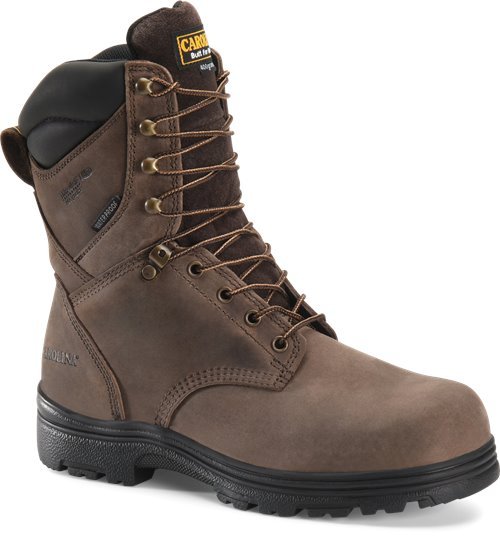
Bottom line: Try both on. Fit decides this matchup more than features. Carolina’s loggers and 8-inch insulated boots are a strong pick for cold, rough ground.
Timberland PRO, Wolverine and Irish Setter
- Timberland PRO offers insulated, waterproof boots in lines like Boondock and Endurance, many with composite toes and Anti-Fatigue Technology footbeds. Good for long, active shifts in the cold.
- Wolverine makes waterproof and insulated work boots, many with its DuraShocks comfort system. A solid choice for all-day wear.
- Irish Setter, a Red Wing brand, brings its hunting background to work boots, with insulated waterproof options such as Wingshooter styles. Good for people who stand still in the cold.
Winter Work Boot Brand Comparison
| Brand | Typical styles | Winter strengths | Good for |
|---|---|---|---|
| Thorogood | Moc-toe wedges, loggers, Wellingtons | Welted leather; waterproof and insulated options; American Heritage made in USA | Concrete, trades, people who like classic boots |
| Ariat | Athletic-style lace-ups, Wellingtons, hikers | ATS support; H2O waterproof styles; composite toes | Long shifts, people who want out-of-box comfort |
| Georgia Boot | Farm and work boots, wedges | AMP cushioning; rugged builds | Farm, site work, all-purpose |
| Carolina | Loggers, wedges, 8-inch boots | Insulated waterproof boots; some USA-made styles | Rough ground, cold outdoor work |
| Timberland PRO | 6-inch and 8-inch lace-ups | Anti-Fatigue footbeds; insulated waterproof options | Construction, active cold-weather work |
| Wolverine | Lace-ups, wedges, hikers | DuraShocks comfort; waterproof options | All-day wear, mixed jobs |
| Irish Setter | Wingshooter, wedges, hikers | Insulated waterproof options | Cold, low-activity work |
Browse all our insulated boots to compare styles.
Sizing, Socks and Break-In for Winter Boots
- Fit with your winter socks. Thicker socks can change your fit by half a size. Bring them when you try on boots.
- Leave toe room. Toes crammed against the toe cap get cold faster because there’s no room for warm air.
- Don’t double up socks in a boot that wasn’t fitted for them. It cuts circulation and makes feet colder.
- Break in new boots early before the hard cold sets in. Insulated, welted boots can be stiff at first.
Care for Winter Boots
Salt, slush and wet leather are tough on boots. Rinse salt off with fresh water, let boots dry at room temperature away from direct heat with the insoles pulled out, and condition the leather once they’re dry. A boot dryer helps if you work outside every day.
Frequently Asked Questions
Is Thorogood better than Ariat?
Neither is better for everyone. Thorogood is known for traditional welted leather boots like moc-toe wedges, while Ariat focuses on lighter, athletic-style boots with ATS support. Try both on with your work socks and pick the one that fits your foot and your job.
Which is better, Georgia Boots or Carolina boots?
Both make rugged, dependable work boots, so fit usually decides it. Carolina is known for loggers and insulated waterproof boots, and some styles are made in the USA. Georgia Boot is known for tough farm and work boots with AMP cushioning.
How much insulation do I need in winter work boots?
For active outdoor work in a Chicago winter, 200g to 400g is the most common choice. If you stand still for long periods in very cold weather, consider 600g or more. Too much insulation makes your feet sweat, which can leave them colder.
Are steel toe boots colder in winter?
Steel conducts cold, so steel-toe boots can feel colder at the toes, especially with little insulation. Composite toes don’t conduct cold the same way and are usually lighter. Both must meet the same ASTM F2413 protection requirements.
Are Thorogood boots made in the USA?
Some are. Thorogood’s American Heritage series is made in the USA with USA and globally sourced components, while other Thorogood lines are made elsewhere. Check the label or product details for the specific boot.
Get Fitted for Winter Boots at J.M.D. Sox Outlet
The best way to choose between Thorogood, Ariat, Carolina, Georgia Boot and the rest is to try them on side by side. Our fitters have been helping Chicago-area tradespeople and crews get through winter since the 1990s.
Call the store to check sizes, and we’ll set your boots aside for pickup at that same store. Or just walk in. We take special orders for hard-to-find sizes and widths, specific models and bulk crew orders.
- Oak Forest: 6220 159th Street, Oak Forest, IL 60452, on 159th St near Rob Roy Dr, across from the Tinley Creek Trail System. Call (708) 535-9714. Hours: Mon–Fri 11 AM–7 PM, Sat 9:30 AM–5:30 PM, Sun 11 AM–5 PM.
- Hoffman Estates: 19A Golf Center, Hoffman Estates, IL 60169, in the Golf Center next to TJ Maxx, off Golf and Roselle Roads. Call (224) 795-5566. Hours: daily 10 AM–7 PM.
Get directions on our locations page, or browse all our work boots before you visit.